Co-founded in College Pandemic, Campus set out to fix how students discovered clubs and community, a problem COVID made urgent overnight. I led research and design and built roughly half the frontend, eventually winning a competitive bid to run the university's official virtual club fair.
RoleCo-Founder, Designer & Product Lead
ProblemClub discovery ran through a single front-loaded club fair, leaving students no path back in, and no virtual equivalent once COVID cancelled it outright.
OutcomeWe ran our University’s official virtual club fair with over 1500 active users and 220 clubs signing up. However a lasting campus wide shut down stifled long term engagement.
Timeline2019–2022
ToolsFigma, React Native, PostgreSQL, Zoom
Problem Statement
Discovery Was Front-Loaded, and Students Couldn't Catch Up
It took me a while to find my place during my first year of college. I became an expert in both joining and leaving communities before I found where I was happiest. Finding my place took a lot of luck and perseverance.
The one mechanism built to fix that was an in-person club fair during the first weeks of fall semester. It worked well for the students it worked for, but it front-loaded all discovery into a moment when most first-years were distracted by classes, new friendships, and the general chaos of starting college.
It also left no good path back in. Students who didn’t find their fit the first time, or whose plans changed later in the year, had nowhere to turn. When COVID hit, the fair was cancelled outright, and the informal, serendipitous ways students normally found community (walking back from the library, a flyer in a campus-wide group chat) had no virtual equivalent.
We knew this problem intimately from our own experiences, and validated it by talking to dozens of other students.
Thesis
The only formal way to find a club came all at once, in the most chaotic weeks of the year, but finding your fit takes time. Everywhere else, discovery ran on word of mouth, which only reaches students already in the loop.
User Research and Analysis
Finding Your Fit Was Left to Chance
I’d lived a version of this problem myself. I met my eventual co-founder through track, and we’d both gone through that spring scramble of trying to find a new community after our first-semester groups hadn’t worked out. So going into this, I already had a strong hunch about what was broken. But a hunch isn’t research.
Over about a month at the start of the school year, I ran around a dozen exploratory interviews with first-year students, formal interviews with club leaders, not to mention the countless informal conversation I had with just about anyone to better understand the issues. I also conducted a competitive analysis against GroupMe, which despite being a messaging app, was the dominant way that clubs advertised for events. We synthesized all of it as a team through How Might We sessions, dot-voting to prioritize which problems to actually go after.
What I asked first-years
Tell me about the last club event you went to. How did you first hear about it? Did you go alone, or with a friend?
What I asked club leaders
How do new members usually find you? Where do you post your events, and which of those actually brings people in?
Discovery Was More Serendipity Than System
Most students found clubs through word-of-mouth and mutual friends, not anything resembling a deliberate search. Students who made close friends in their first couple weeks had an easier time, because those friends became a pipeline of invitations and reassurance. Students who didn’t get that early win tended to stay stuck. Showing up to something alone is a much bigger ask than showing up with someone you already know.
Showing up
Club leaders thought
Our club is open to anyone. Just come to an event.
vs.
First-years felt
Clubs didn't feel easy to just show up to if you didn't already know someone there.
The university calendar
Club leaders thought
Posting every event on the required calendar, clunky as it was, would get it seen.
vs.
First-years felt
Students rarely checked it, so all that work brought leaders no reward.
Where Discovery Broke Down
Across the interviews, the same few problems kept coming up. Each one made it harder for a first-year to find a club, or for a club to find them.
01
Events lived in private group chats
Most events were advertised in private group chats, because there were no formal channels for finding them.
02
Groups were insulated
Once you were in a group, it was hard to see what else was out there. Leaving one you were only halfway happy in meant taking a leap of faith.
03
The club fair was a one-shot deal
It happened once, at the start of fall. If your first communities didn't work out a few weeks into the semester, there was no way back in.
04
Small clubs couldn't get the word out
Without a large member base to spread the word, smaller clubs don't have enough reach, even when their events are genuinely great.
Design and Prototyping
Aligning Discovery to How Students Actually Behave
We didn’t land on the final design right away. We went through four real directions before settling on one, usability testing each with three to four students per round.
Event-Centric
Built around the idea that students don't really join clubs, they join events, and the club is just the container. This tracked with research, but club leaders pushed back. They didn't want their club's identity lost in a generic events feed.
Serendipity & Proximity
Surfaced events based on timing and how close you were, trying to recreate that "this is happening right now nearby" feeling. It felt too random. Students had no way to gauge whether they'd know anyone there, so they lacked the confidence to show up.
GroupMe-Style
Casual and informal, built to encourage spontaneous discovery. This was probably the closest to genuinely recreating serendipity, and it did nudge people outside their comfort zone in testing. But it was confusing for students and hard for club leaders to map their events onto.
Club-Centric (The Winner)
A browsable events catalog where every event was clearly tied to its hosting club, and each club had its own page linking out to whatever channels it already used to talk to members. We didn't try to replace GroupMe as the communication layer. We focused on the piece that was actually broken: discoverability.
Design sprint, 2020
Our How Might We and dot-voting board from a team design sprint.
Wireframes to expo build
An overview of just some of the many ideas we prototyped from early concepts to what was actually built.
Leading With Clubs
Events were often the way in, but clubs were where the community actually lived. So we built V1 around them. A club-first layout felt familiar to club leaders, and we needed their buy-in. It also mirrored how students already found things: through a group first, then its events.
Clubs didn’t struggle to reach their own members. GroupMe and private group chats already kept members up to date on events. The hard part was getting students to know a club existed at all. Campus became the front door that funneled students into those chats, and let the event channels clubs already had do the rest. We planned to add event-driven discovery that led back to clubs later, but this was our starting point.
Scroll sideways to see all 3 screens
1. Explore
2. Club page
3. Your groups
Clubs to browse, matched to your interests. Each club page linked out to the chats the club already used, and every club you followed stayed in Your Groups after the fair.
Rollout and Adoption
Partnering for the Club Fair
While we were iterating, we started talking with our student engagement office, sharing research and comparing notes on how to improve the first-year experience.
When the COVID pandemic hit, and our schools campus closed for in person events for over a year, this relationship proved invaluable. Up until this point we had been planning for a launch that centered around in-person community and giving students the knowledge and confidence to show up to events. COVID forced us to pivot overnight, as any semblance of in person community was evaporated. The office of student engagement kept us in the loop early about how the administration was handling the pandemic shared research with each as we both scrambled to adapt.
They’d already been evaluating outside vendors for a virtual club fair, and we eventually won that bid, which became our actual launch moment. It gave club leaders a concrete reason to sign up and guaranteed a huge amount of visibility and students signing up.
Hank, who joined as our third co-founder in 2020, designed many parts of the fair experience, like the livestream.
Expo planning board
Planning the virtual fair with the Office of Student Engagement.
The fair ran on Monday, Aug 24, 2020, from 4:15 to 6:15 PM. Before it started, students signed up and told us what they were into, and clubs set up their own pages, which our team reviewed before they went public.
Scroll sideways to see all 3 screens
1. Student: about you
2. Student: interests
3. Club: create group
Two ways in. Students told us who they were and what they were into, so the expo could suggest clubs to them. Club leaders filled out one form to put their club on Campus, with a Zoom link for fair day and links to the chats they already used.
Bringing an In-Person Feel to a Virtual Fair
The best part of an in-person club fair was all the wacky things club leaders did to show off their club’s personality and pull people over to their booth. We wanted to keep that feel, and the livestream was one of the ways we did it.
For the two hours of the fair, we ran a livestream co-hosted with the Office of Student Engagement. It streamed on YouTube and played picture-in-picture in the app, so students could keep browsing while they watched. Clubs got their moment on stream, and a lot of them leaned into it. The Outing Club ran a virtual hangboarding challenge, and other clubs came up with their own goofy bits to make it as fun as possible.
Alongside the livestream, every club ran its own Zoom room, linked from its page in the app, so students could jump in, say hello and get to know people in the club. Clubs could also post short videos, which played in a scrolling “virtual walk” feed inside the app. This feed mixed clubs matching a student’s interests with ones slightly outside them, to recreate some of that in-person serendipity on purpose.
Scroll sideways to see all 3 screens
1. Welcome
2. Tour: livestream
3. Tour: browse clubs
What students saw when they opened the expo: a welcome, then a short tour covering the livestream and how to browse and follow clubs.
Outcomes and Impact
A Virtual Club Fair That Moved the Needle
The club fair worked. We had over 2,000 signups and 220 clubs registered in the app, with over 1,500 active users at the time of the fair. For a school of about 5,500 undergrads, that was a large share of the first-year class, who the app was mainly marketed to.
Club leaders’ Zooms were packed for the whole livestream, and students found communities they might not have known about before.
But Zoom Fatigue Was Real
Despite our best efforts, the in-person shutdown made it really hard to carry the momentum of the club fair forward. Zoom fatigue became a real issue: after spending all day in classes on Zoom, students didn’t want to hang out online too, and many clubs started to struggle with retention.
Most of our plans to re-engage students felt futile in an environment that didn’t let community exist in the first place. For safety reasons, many students simply retreated into their own insulated bubbles and strict campus guidelines forced in-person gatherings underground.
Key Takeaways
A Lesson in Validation Speed
We began working on campus late into the spring of my freshman year. Between classwork, many rounds of design and iteration, and the task of programming the app it took our team of two nearly a full year to be ready to launch with a product we were confident in. And then COVID came out of nowhere and completely changed our plans.
While I’m proud of how our team adapted to the pandemic and found a way to still make an impact, I’m disappointed that we couldn’t make an impact sooner. Ultimately, campus never fully returned to open and welcoming culture that had existed before the pandemic by the time we graduated. So we never got to see how our app might have enabled human connections that might never have occurred before it. We were too slow.
What I’d Do Differently: Run Campus as a Group Chat First
Everyone already had GroupMe. Clubs shared news there, and there were chats like the free food chat. It was a clunky medium, but its casualness fit the word-of-mouth culture, and the barrier to entry was very low.
So I’d run the app’s functions manually through a group chat. Our team would gather the events and post them. Then we’d try different framings. Post days in advance, or last minute? Lead with need a study break? Here are three low-stakes things you can do this afternoon? Because people could act on each post live, we’d see which framing actually got them to go. Then we’d launch the app to the people already in the chat.
We could have done this weeks before we ever opened Figma or VSCode. That would have given us real behavioral data, which was impossible to get from usability testing.
Use the right research methodology for the question at hand
ln testing, I asked students to find an event they’d want to go to, and one outside their usual comfort zone. They could find events, and some said they could see themselves going. But the question we were really trying to answer was whether a student would check the app when bored, and then actually go. A usability test can’t answer that.
The only reliable way to know what people will actually do is to observe them. Simple real world experiments would have told is more in a week than months of testing would have.
More Case Studies
Ready for Another Adventure?
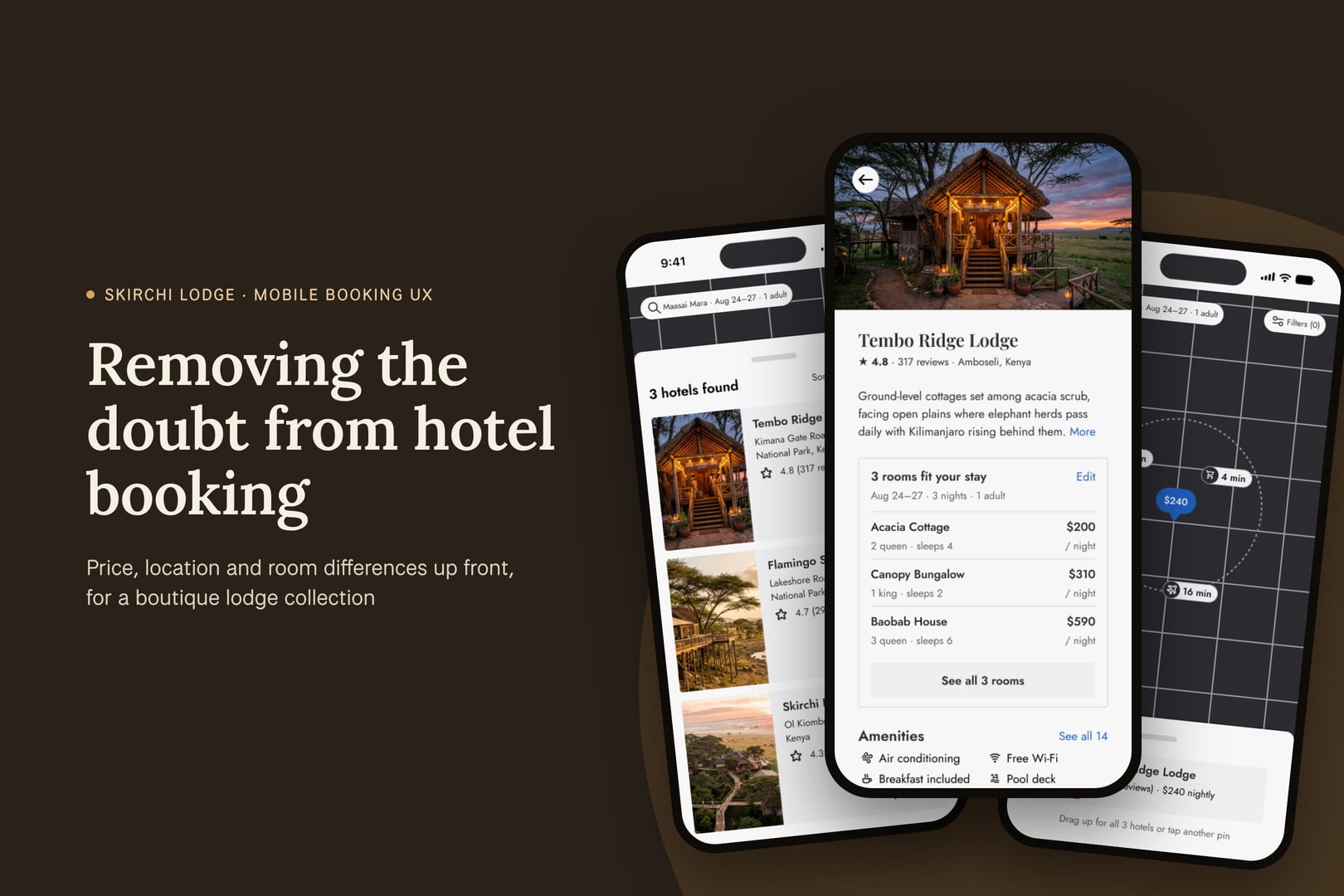
Removing Doubt From Mobile Hotel Booking
This project was part of a UX Design Institute assignment to design the booking experience for a hotel aggregator website. I first analyzed competitor websites to find gaps in the market before designing and iterating on my own prototype.
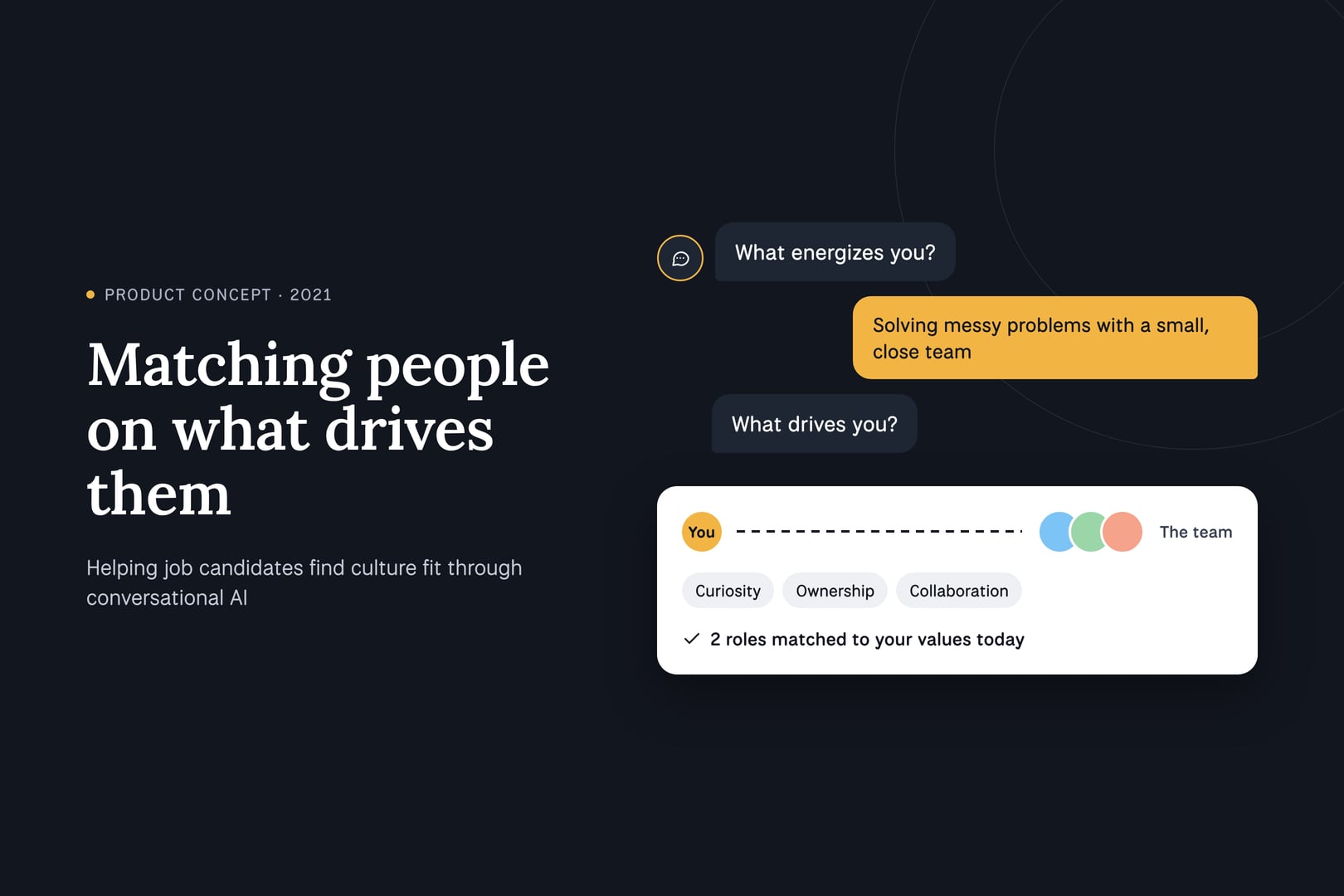
Job hunting in 2021, I couldn’t tell which companies shared my values. Did hiring managers feel the same gap? I interviewed both sides of hiring, then pitched HayStak, a conversational AI that matches candidates on culture fit, not keywords.